Tech startups don't own factories or land - their value is in software, recurring revenue, and user growth. A professional valuation converts your intangible story into a figure that holds up legally with regulators filing your share issuance, investors stress-testing your pitch, and acquirers running due diligence. This guide explains when you need one, who must sign it, and how to make it work for you beyond the regulatory filing.
If you're a tech founder in India, valuation isn't just a fundraising formality. It's a recurring compliance requirement that shows up every time you issue shares, bring in a foreign investor, grant ESOPs, or plan an exit. Getting it wrong, or skipping it, doesn't just make you underprepared—it leaves you non-compliant.
In my experience advising Indian startups, founders often treat valuation as a checkbox exercise. However, a properly structured valuation helps you protect your cap table during equity dilution and builds massive credibility with institutional investors.
At EaseUp, we simplify this process by mapping your corporate events to the correct valuer and methodology. If you want to prepare your numbers for an upcoming round, read about our business valuation services.
Three major regulatory frameworks create overlapping valuation obligations for Indian tech companies. Most founders are exposed to all three by Series A:
Companies Act, 2013 Section 247: Any private placement, preferential allotment, rights issue, or sweat equity grant must be certified by an IBBI-registered valuer under the Ministry of Corporate Affairs (MCA) guidelines. Non-compliance can invalidate the entire share issuance.
FEMA (Foreign Investment): When you raise capital from a foreign investor, the company must generally issue the equity instruments within 60 days of receiving the funds and file Form FC-GPR within 30 days of allotment on the RBI FIRMS portal. For unlisted companies, the issue price should not be below fair value determined using an internationally accepted arm’s-length methodology, typically certified by a Chartered Accountant or a SEBI-registered Merchant Banker.
Income Tax Act (Angel Tax): While the Finance Act, 2024 abolished the tax on share premium above FMV (Section 56(2)(viib)), tax officers and diligence teams still scrutinize share pricing history. Having a certified valuation report protects you against retrospective queries.
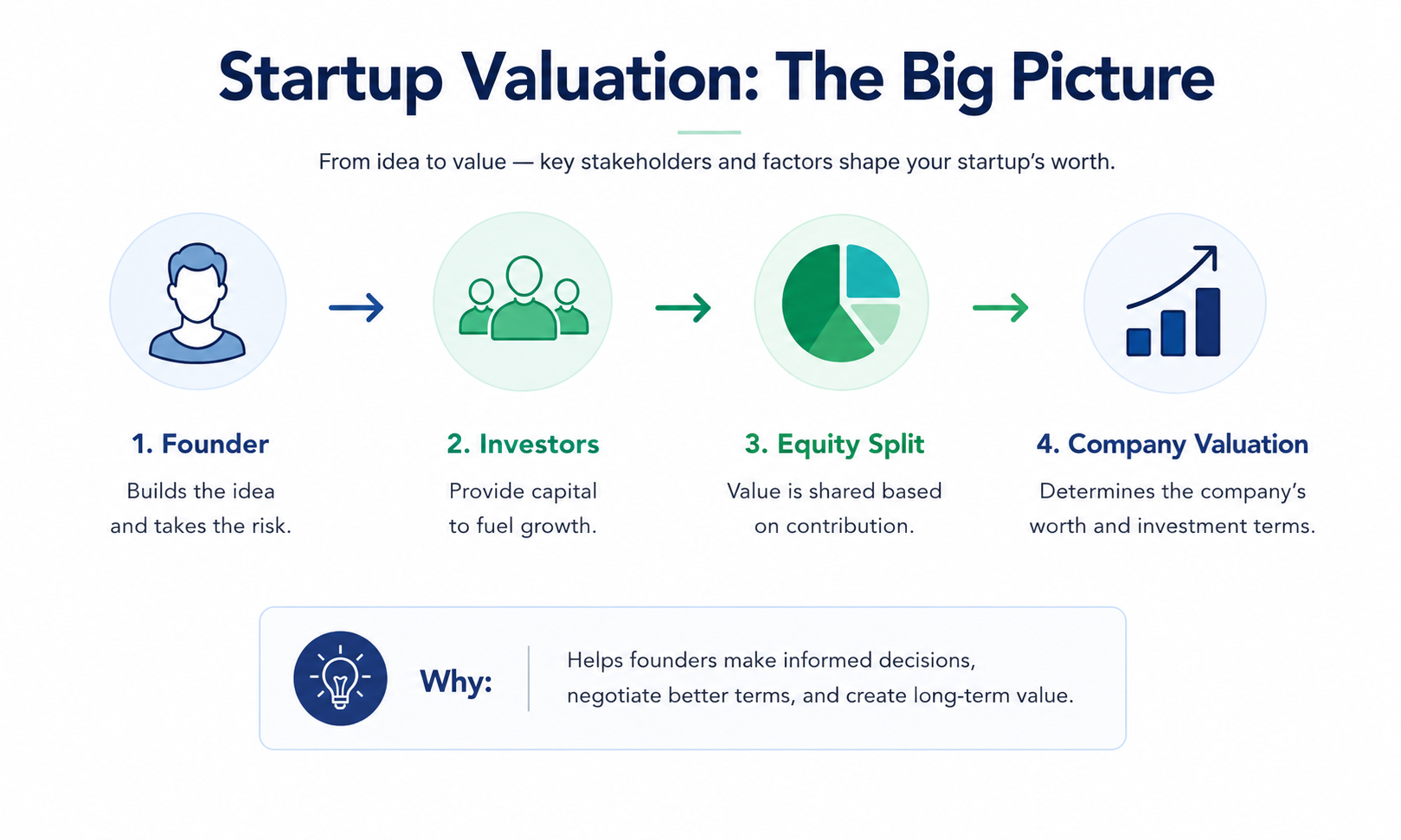
Every key stakeholder relationship in your company runs through a valuation number. Get it right once, and every future conversation with investors, employees, and regulators gets easier.
Here is a quick breakdown of the certifier requirements for common corporate events:
Corporate Event | Valuation Required? | Who Must Certify? |
Foreign Investor (FDI) — Any Stage | Mandatory | SEBI-registered Merchant Banker or CA |
Preferential Allotment | Mandatory | IBBI-registered Valuer |
ESOP Grant to Employees | Mandatory | SEBI-registered Category I Merchant Banker |
M&A Share Swap or Merger | Mandatory | IBBI-registered Valuer |
Seed Round — Indian Angels Only | Strongly Recommended | CA or IBBI-registered Valuer |
Annual Board / Investor Reporting | Recommended | IBBI-registered Valuer |
The Indian VC and PE market has shifted. Investors now arrive at term sheet conversations with sharper diligence and expect methodologies backed by hard operational data.
A professional valuation report replaces the "trust me" dynamic with an auditable methodology, letting investors stress-test your growth assumptions. It also prevents costly cap table mistakes—undervaluing forces you to surrender too much equity, while overvaluing without evidence can lead to a down-round later.
If you want to review standard package structures and deliverables that match your current startup stage, browse our options.
ESOPs are your most powerful tool for hiring senior tech talent without burning runway. But issuing stock options without a current, certified FMV can create a direct tax liability for employees.
If your exercise price is set below FMV without a certified valuation, the difference is taxed as salary income (perquisite) under Section 17(2) of the Income Tax Act. A fresh IBBI-certified valuation for each grant pool keeps employee tax liabilities predictable and your cap table defensible.
Your Virtual CFO should coordinate this cycle, ensuring you have a current report before the next grant date.
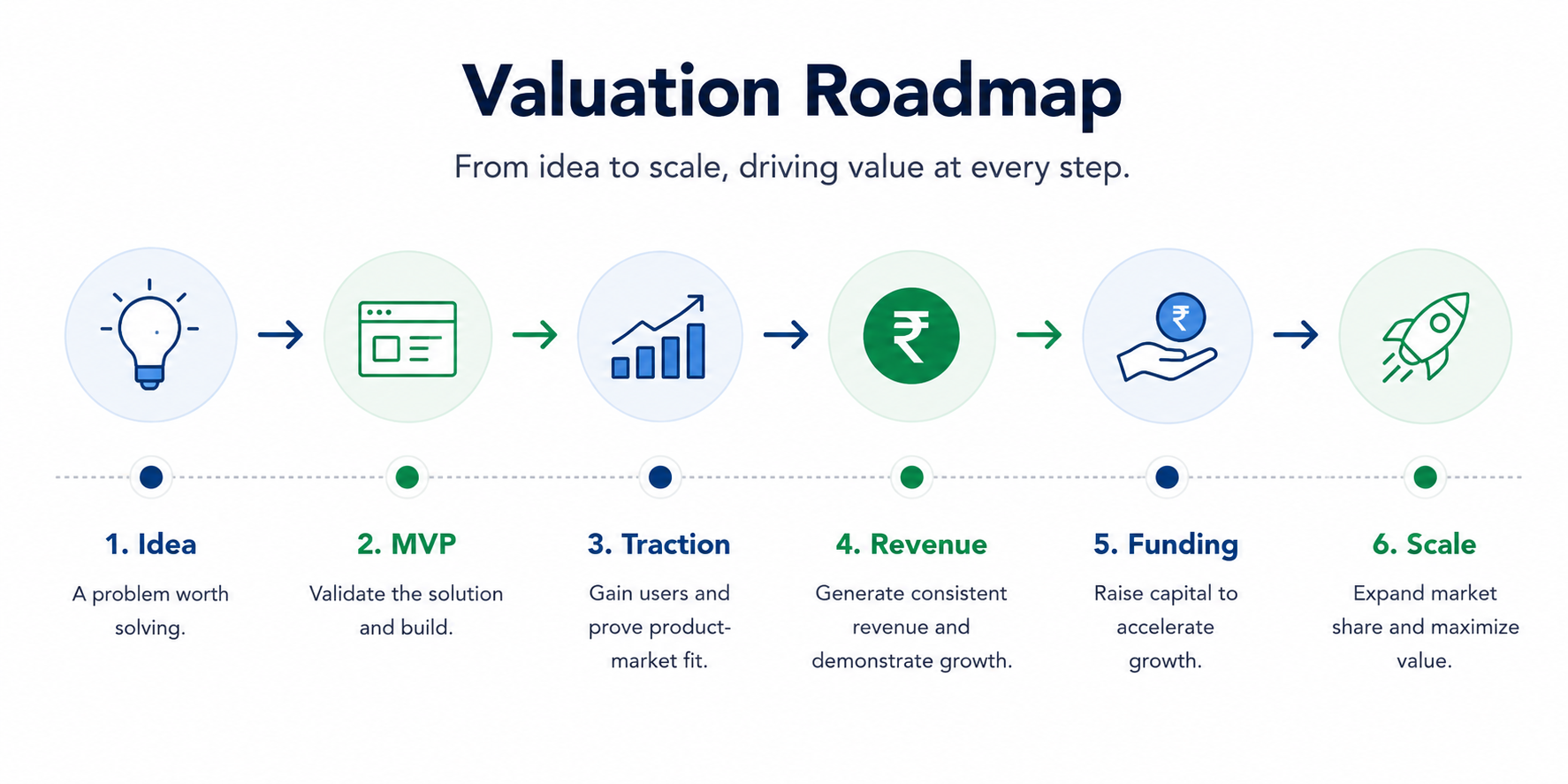
Valuation is not a one-time event. It recurs at every growth milestone—and each one requires a fresh, purpose-matched report.
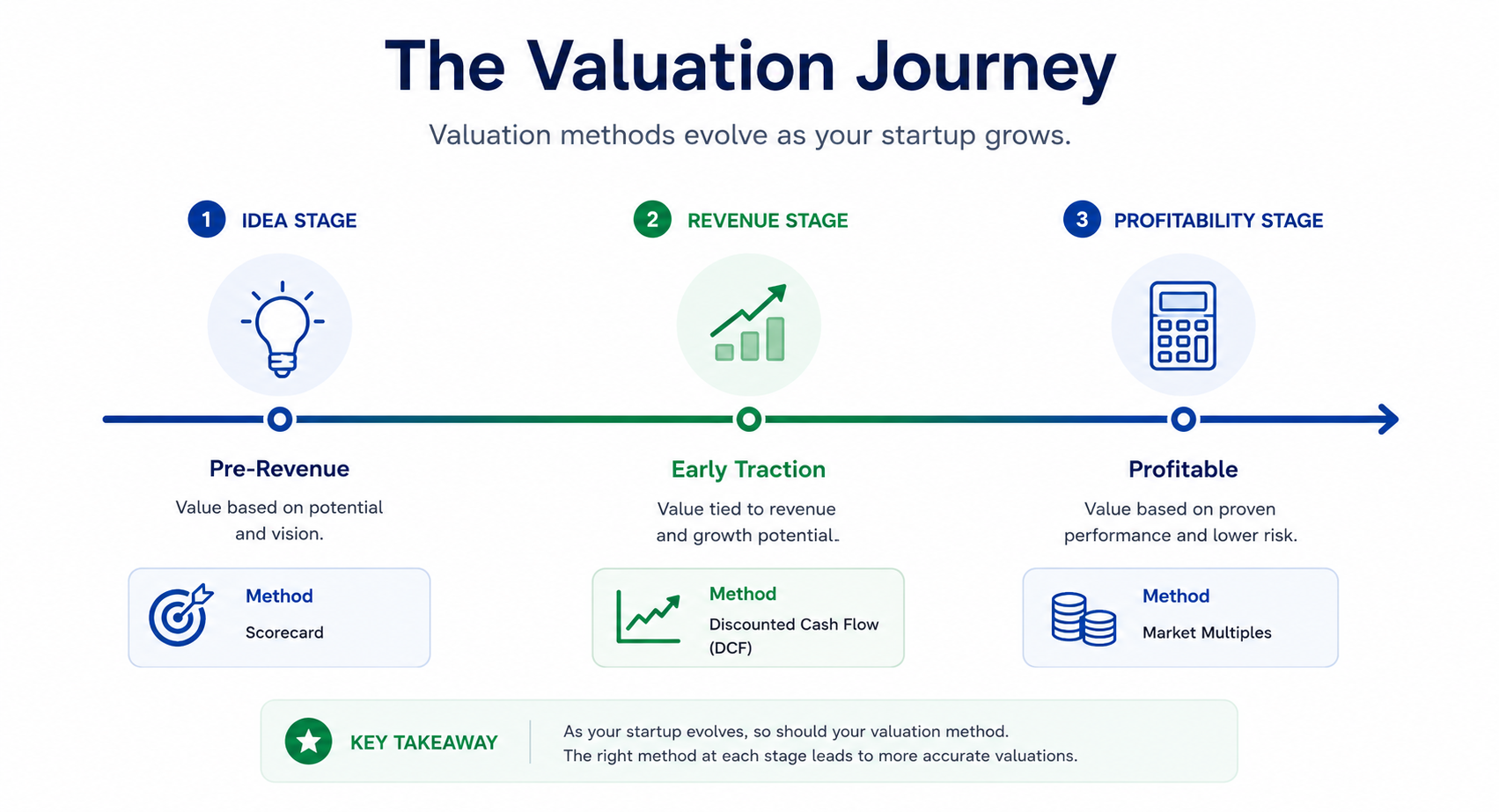
Common valuation methodologies used by tech companies include:
Discounted Cash Flow (DCF): Best for SaaS companies with predictable ARR and long-term contracts. Valuation outcomes can vary significantly based on growth rate, net revenue retention, profitability, sector, and broader market conditions.
Comparable Company Analysis: Benchmarks your metrics against public-market peers or recent private transactions.
Revenue Multiples: Useful for early-stage or pre-profitability SaaS startups, but ARR or revenue multiples should be treated as market heuristics rather than fixed benchmarks. Multiples can vary widely across funding stages and market conditions depending on growth rate, retention, margins, sector and investor sentiment.
Asset-Based Valuation (NAV): Primarily derived from technology intellectual property, suited for IP-heavy or pre-revenue businesses.
If your tech company holds DPIIT startup recognition, you gain significant valuation-adjacent advantages. A credible valuation protects your Section 80-IAC tax holiday application.
Furthermore, under the recent regulatory updates, the turnover threshold for recognition is ₹200 crore (and up to ₹300 crore for Deep Tech startups) with a 20-year recognition window for AI, semiconductors, or biotech. This extended horizon materially changes your DCF terminal value assumptions.
Our Virtual CFO team can help you assess your eligibility and align your valuation model with these regulatory benefits.
Statutory Requirement: All share allotments, FDI, and ESOP pools require certified valuations under MCA and RBI guidelines.
Cap Table Protection: A formal valuation defends your pricing, protecting founders from excessive equity dilution.
Certifier Matching: Ensure you use the right certifier (IBBI Valuer vs. Merchant Banker) depending on whether the event is domestic or foreign.
Annual Baseline: Treat valuation as a recurring review tool to benchmark your multiples (such as ARR ratios) against current market trends.
Startup valuation services aren't overhead; they're the infrastructure every funding round, ESOP scheme, and regulatory filing runs on. Our team handles everything from certifier selection to report preparation and filing.
Book a free 30-minute consultation call with our senior finance advisory team to discuss your valuation requirements today.
Not for every event but for the most common ones, it's a legal requirement. FEMA filings, ESOP grants, preferential allotments, and M&A share swaps all require a certified valuation under the Companies Act, 2013 and FEMA. Skipping it doesn't save time it creates regulatory exposure that costs far more to resolve.
It depends on the event. For Companies Act-mandated events (ESOPs, allotments, M&A), only an IBBI-registered valuer under Securities or Financial Assets qualifies. For FEMA purposes, a SEBI-registered Merchant Banker or practicing CA using internationally accepted methods is valid. Using the wrong certifier invalidates the report entirely.
For early-stage tech companies, fees typically range from ₹25,000 to ₹1,50,000 depending on complexity and whether multiple methodologies are required. FEMA-specific Merchant Banker reports sit at the higher end. Contact EaseUp for a fixed-fee quote specific to your event.
No. The Finance Act, 2024 removed Section 56(2)(viib), but the Companies Act and FEMA requirements for certified valuations are separate statutes and remain fully in force. You still need a certified valuation for every equity issuance event that falls under either framework.
Generally, no. The certifier requirements and purpose statements differ across events. Reusing a FEMA report for an ESOP grant or vice versa is a compliance risk that surfaces in your next due diligence process.


Your trusted partner for all your Financial needs.


Finance Management
Strategic Services