
Startups move fast, but finance problems usually move faster when there is no structure behind growth. Bringing in financial consultants helps founders build runway visibility, optimize cash flow, tighten compliance, and prepare for investor due diligence. This guide explains what startup financial consultants do, when to hire one, and how to choose the right partner for your growth stage.
Financial consultants for startups help founders build clarity around the numbers that shape growth. Depending on the stage of the business, this can include cash flow planning, monthly reporting, budgeting, fundraising preparation, and strategic decision support. Rather than just recording historical transactions, a consultant translates data into actionable steps to stretch your cash runway and reduce regulatory risk.
In my experience advising Indian tech startups, many founders wait until they receive a tax notice or face a cash crunch before setting up a proper finance function. By then, cleaning up messy files is costly and distracts you from scaling.
At EaseUp, we believe robust financial oversight is a growth driver, not a compliance checkbox. To see how we structure our services, explore our Virtual CFO services.
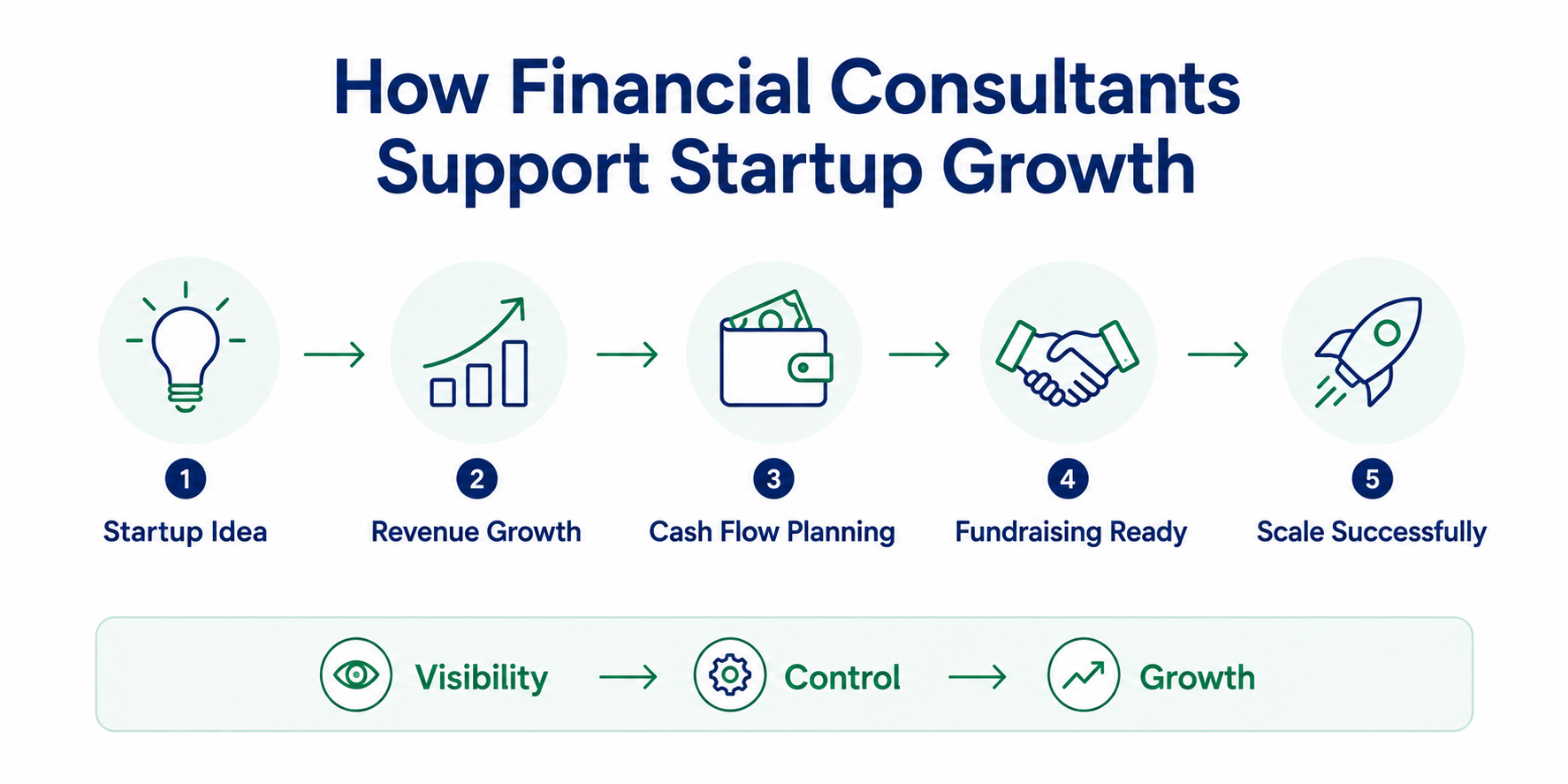
A financial consultant helps startups build clarity around the numbers that shape growth. Depending on the stage of the business, that can include budgeting, cash flow planning, compliance oversight, monthly reporting, profitability analysis, and strategic financial decision-making.
For most early and growth-stage companies, the role sits between routine accounting and full-time executive finance leadership. The goal is to:
Build financial visibility across revenue, costs, working capital, and runway.
Improve reporting discipline and monthly review rhythm.
Support compliance planning so obligations do not become sudden disruptions.
Help prepare for fundraising, due diligence, or bank finance.
Turn financial data into practical next-step decisions.
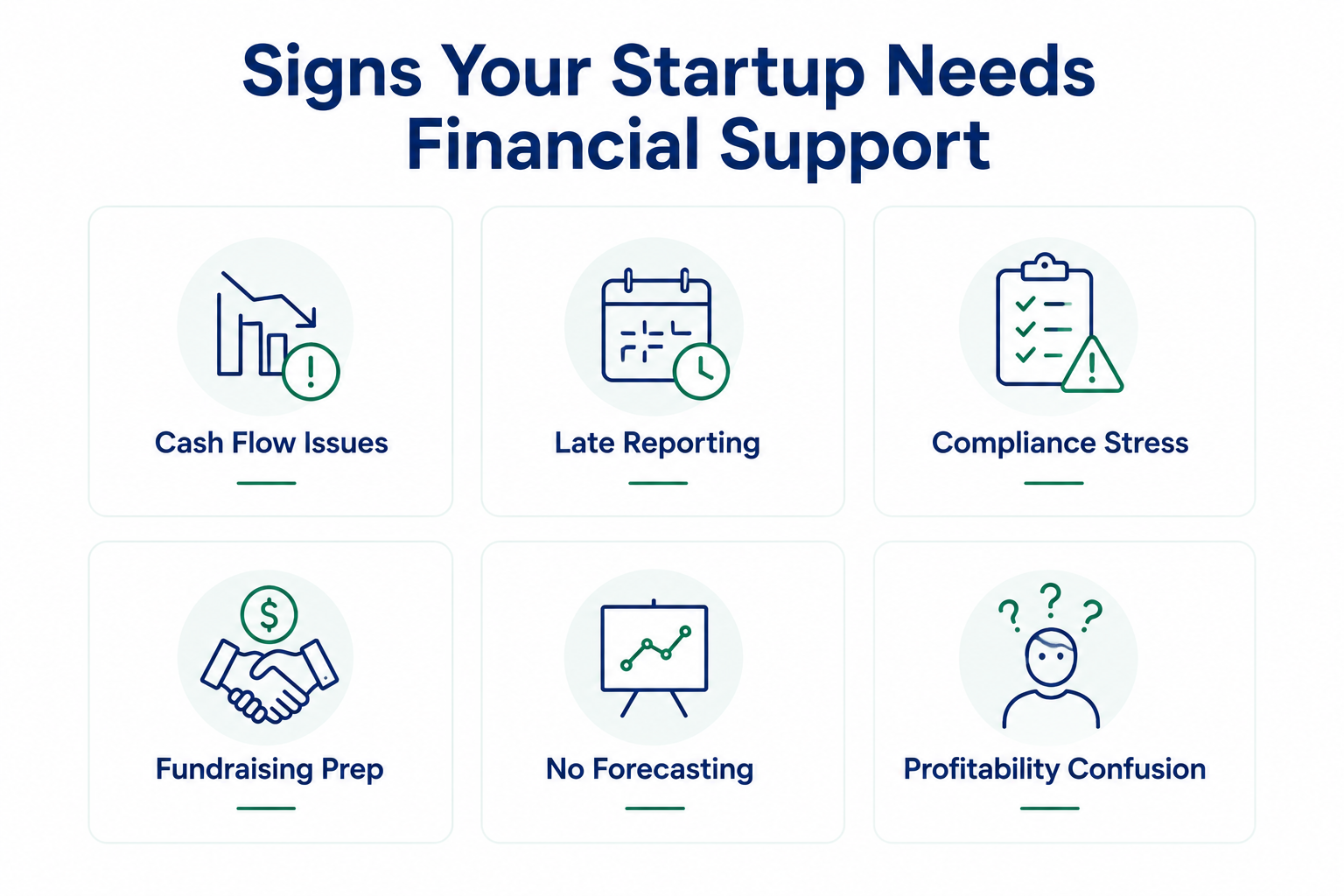
Most startups do not hire finance support because they love finance. They do it because the business reaches a point where poor financial visibility starts slowing growth, increasing stress, or weakening investor confidence.
Common signs include:
Cash feels tighter every month even though revenue is growing.
You do not have a rolling cash flow forecast for the next 8 to 13 weeks.
Books close late and reports are not decision-ready.
GST, TDS, or payroll management feels reactive.
You are preparing for fundraising, due diligence, or lender discussions.
You are unsure which products, channels, or customers drive actual profit.
Finance still depends too heavily on spreadsheets and founder memory.
If several of these sound familiar, bringing in structured finance support usually creates immediate value. If you want a builder's perspective on setting up your finance systems, check our Accounting Guide for Startups.
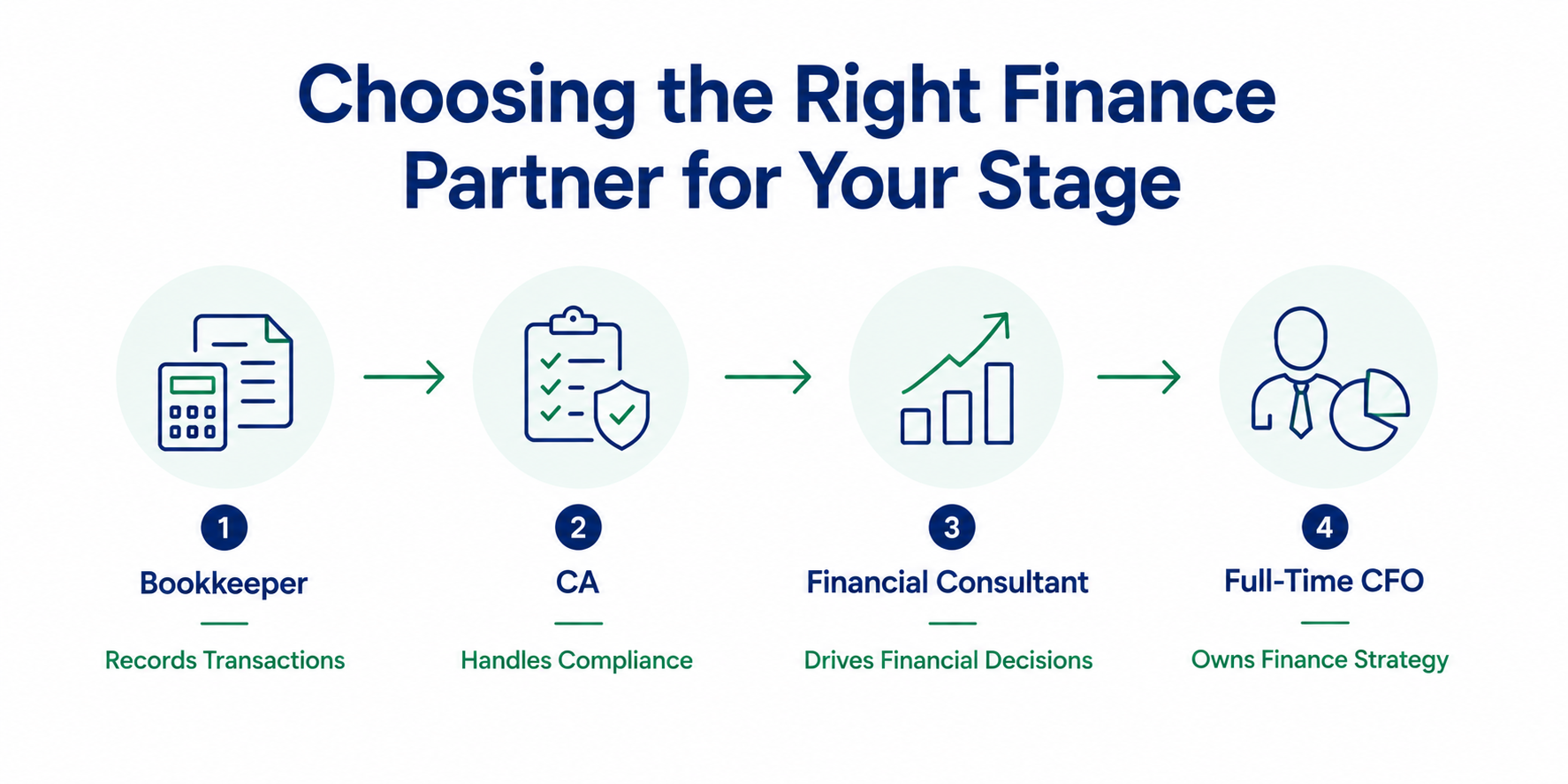
Founders often ask whether they need a consultant, a CA, or a CFO. The answer depends on what problem they are trying to solve.
Support Type | Best For | What You Usually Get | Common Limitation |
Bookkeeping support | Early-stage operational finance | Transaction recording, reconciliations, basic bookkeeping | Limited strategic guidance |
CA or compliance support | Filings, tax, statutory discipline | Returns, compliance work, financial statements | Usually not focused on forecasting or growth planning |
Financial consultant / Virtual CFO | Growing startups needing clarity | Cash flow planning, MIS, budgeting, forecasting, fundraising readiness | Needs regular business review and founder alignment |
Full-time CFO | Larger companies with complex needs | Dedicated executive ownership of finance | High fixed cost for many startups |
If you want to review standard package structures and deliverables that match your current startup stage, browse our options.
Many startup finance problems begin before cash runs out. They begin when no one has a clear view of receivables, upcoming obligations, burn, runway, or spending priorities. Financial consultants help create that visibility through regular reporting and cash flow planning. This matters because a startup can look healthy on paper and still face operational pressure if cash is locked in delayed collections.
For Indian startups, maintaining continuous compliance is particularly challenging. The Reserve Bank of India (RBI) regulates foreign investments and cross-border transactions, while the Ministry of Corporate Affairs (MCA) mandates strict audit trails. GST, TDS, and statutory filings can quickly become a source of stress. Good consultants help founders treat compliance as part of operating rhythm rather than a last-minute emergency, which is exactly how we run our accounting and compliance support.
Founders do not just need financial statements; they need decision-ready reporting. That means understanding what is happening in the business, what is changing, and what requires action this month. A good consultant helps answer:
Which customers or channels are actually profitable?
Where is margin slipping?
How much cash should be reserved for upcoming obligations?
Can the business afford a new hire or product investment?
When a startup starts fundraising or due diligence preparation, weak finance systems become visible quickly. Investors want consistency in reporting, a believable financial story, and confidence that the numbers reflect operational reality. Financial consultants help clean up reporting, build projections, and prepare the business for tougher questions during fundraise preparations.
A useful financial consultant should create momentum early. In most cases, founders should expect work across four areas in the first 90 days:
Clean-up and Visibility: Get the books, reconciliations, and reporting baseline in order.
Cash Flow Focus: Understand collections, obligations, burn, and runway.
Compliance Discipline: Reduce stress around filings and recurring obligations.
Decision Support: Create a reporting rhythm that supports real monthly action.
That does not mean everything becomes perfect immediately. It means finance starts becoming usable, reliable, and easier to act on.
The best choice is not simply the cheapest option. It is the partner that can improve financial clarity while matching your startup’s stage, pace, and complexity. Look for a consultant who can clearly explain:
What they will review every month.
What reports you will receive and how often.
How they help with cash flow, compliance, and forecasting.
Whether they understand your business model and growth stage.
How they support investor or due diligence readiness if needed.
It also helps to choose a partner that can bridge day-to-day finance operations and strategic guidance rather than treating them as completely separate problems.
Financial Clarity: Startup consultants move you from reactive spreadsheet management to structured forecasting.
Stage-Based Support: Early-stage companies need hygiene and basic MIS, while growth startups require cash flow modeling and board reporting.
Compliance Focus: A consultant ensures your books remain compliant with the MCA and Income Tax Department regulations.
Fundraising Ready: Engaging a consultant early ensures your data room is structured logically, avoiding deal delays during due diligence.
Understanding the value of financial consultancy is the first step. The next step is defining the level of support your business actually needs, how often you need it, and which outcomes matter most over the next 6 to 12 months.
Book a free 30-minute strategy session with our senior finance advisory team to discuss your startup's requirements today.
A financial consultant helps startups improve financial visibility, planning, compliance discipline, reporting, and fundraising readiness. The role is usually to turn finance from a back-office task into a decision-making system.
Founders usually bring in financial support when cash flow becomes harder to manage, reports arrive late, compliance feels reactive, or the company is preparing for fundraising, expansion, or lender discussions.
A CA often focuses on tax, filings, and statutory requirements. A financial consultant is more likely to focus on cash flow planning, management reporting, forecasting, and helping founders make better business decisions.
No. Many startups need CFO-level thinking before they need a full-time CFO hire. A flexible finance support model can provide strategic guidance without the fixed cost of a full-time executive too early.
Yes. They can help startups improve reporting discipline, clean up forecasts, strengthen financial narrative quality, and prepare better for investor, lender, or due diligence conversations.
Look for clear reporting rhythm, business-model understanding, strong cash flow and compliance discipline, and the ability to turn financial data into practical founder decisions rather than only producing reports.


Your trusted partner for all your Financial needs.


Finance Management
Strategic Services